


From a desert camp to a power cut at home, what 60W, 100W and 200W panels
realistically deliver, and what to pair them with.
Foldable solar panels have quietly become one of the most practical pieces of
energy equipment an ordinary household can own. They fold to the size of a
briefcase, weigh a few kilograms, and turn sunlight which the Gulf and the middle east has in extraordinary abundance into usable electricity anywhere you unfold them.
But what can they actually do? Here is a quick guide, by panel size.
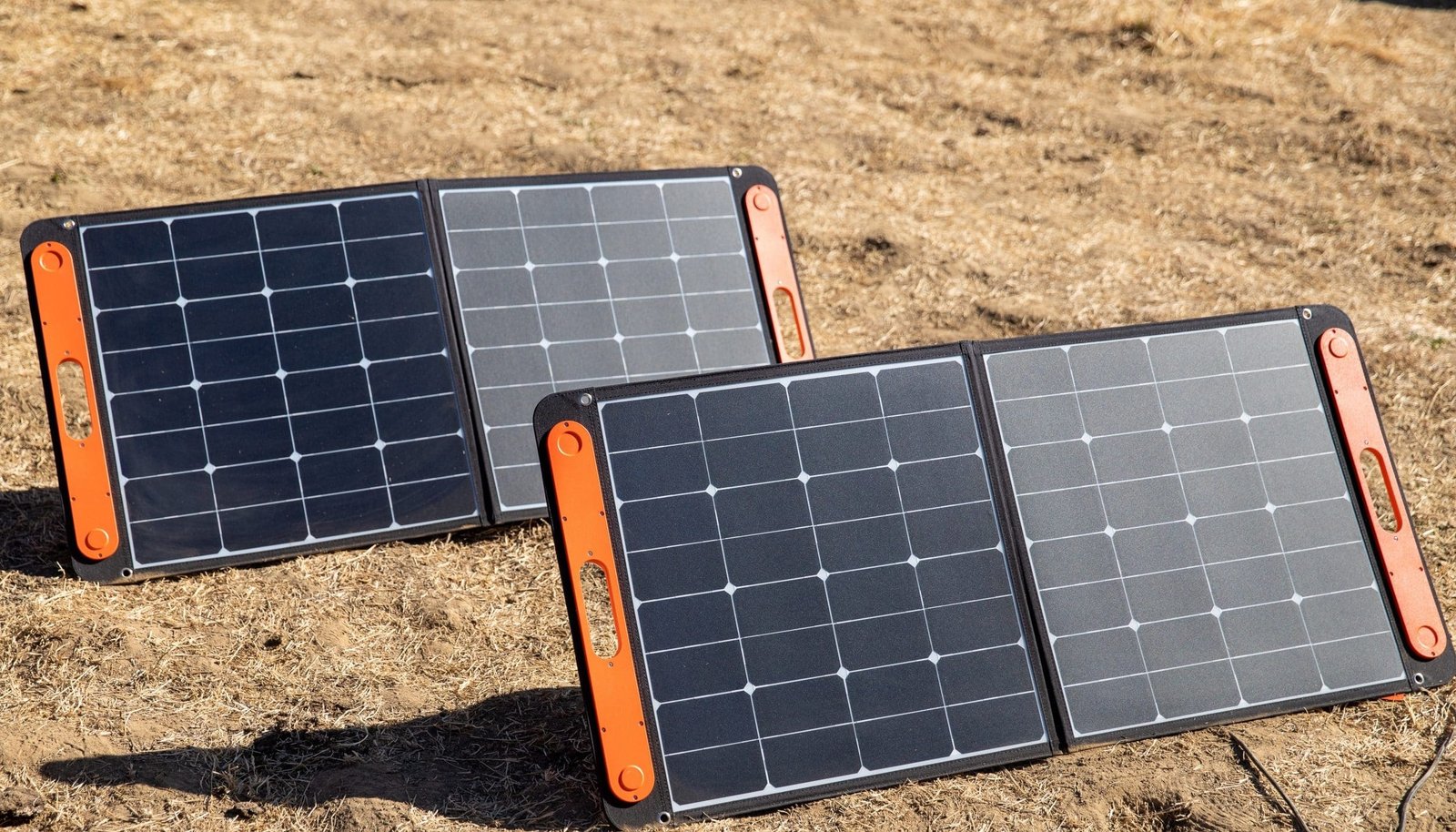
A 100W foldable panel deploys in under a minute. No tools, no installation.
What Each Size Realistically Powers
| Panel | Good for | Realistic limit |
|---|---|---|
| 60W | Phones, tablets, cameras, power banks, LED lights, small fans | Laptop charging is slow; no appliances |
| 100W | All of the above plus laptops, drones, mid-size power stations | Not enough for a 12V fridge over multiple days |
| 200W | Portable fridges, fans running continuously, larger power stations, multiple devices at once | Still not a household air conditioner — be wary of anyone claiming otherwise |
One number worth understanding: panels rarely deliver their rated wattage in the
field. A 100W panel in real conditions typically produces 70–85W — heat, cable
losses and sun angle all take their share. In Gulf summer heat the losses are at
the higher end. This is normal, not a defect. Buy with that maths in mind.
You Can Charge Directly From the Panel — No Battery Needed
A detail many buyers miss: most quality foldable panels have a built-in charge
controller in the junction box on the back, with regulated USB-A and USB-C PD
ports. That means you can plug your phone, tablet, drone, camera or power bank
straight into the panel and charge while the sun is up with no power station , no
extra equipment. A panel with a 60W USB-C PD port will charge a modern laptop
directly, at the same speed as its wall charger.
For day trips, the beach, or keeping devices topped up on a balcony, the panel
alone is often all you need. The controller regulates the voltage so your
electronics are protected even as clouds pass or the light changes.

Plug straight into the panel’s junction box — phones via USB, laptops via USB-C PD.
The Combination That Unlocks Everything
Direct charging has one limit: it stops when the sun does. The pairing that
removes that limit is a portable power station, a battery box with AC
sockets and USB ports. The panel charges the station during the day; the station
powers your devices at any hour.

The pairing that unlocks everything: panel charges by day, station powers by night.
A 100–200W panel paired with a 200–300Wh power station covers a typical camping
or emergency setup comfortably: phone charging, LED lighting, a fan overnight,
a laptop, and a Bluetooth speaker. Step up to a 500Wh+ station and a 200W panel,
and you can run a small 12V fridge, useful both at a desert camp and during an
extended power cut at home.
Worth knowing before you buy !
The panel’s built-in USB ports are regulated and safe for your devices. The
caution applies to the MC4 cable output: never connect it directly to a car or
lead-acid battery without a separate charge controller, a 100W panel can output
up to 20V open-circuit and will damage a 12V battery. Power stations have the
controller built in, which is why that pairing is the simplest route for
non-technical users.
Simple Home Use — More Practical Than You Might Think
You do not need a rooftop installation to put solar to work at home. A foldable
panel on a south-facing balcony, terrace or driveway, feeding a power station
indoors, can quietly cover your phone and laptop charging, Wi-Fi router during
outages, rechargeable fans, and evening LED lighting. For apartment residents
with no roof access, this is the most accessible form of partial energy
independence available today and it packs away in a cupboard when not needed.

No rooftop needed — a balcony, a cable through the door, and a station indoors.

The full off-grid kit in action: panel feeding a power station, ready for day and night.
What to Look For — The Short Checklist
- Monocrystalline cells, 22%+ efficiency — anything above 22% is genuinely premium; many budget panels run 18–19%.
- Built-in controller with USB-C PD output (45–60W or higher) — regulated ports let you charge phones and laptops directly from the panel, no power station required.
- MC4 connectors — the standard plug that connects to virtually every power station brand.
- IP65 waterproofing or better — dust and the occasional downpour should not be a concern.
- Kickstands and a carry case — angle matters enormously; a well-angled 100W panel will outperform a flat-laid 200W one.
- CE and RoHS certification with documents available — if a seller cannot produce the certificates, walk away.
The bottom line: a foldable panel plus a power station is the most
versatile entry into solar power available, one kit that serves a weekend in the
desert, a power cut at home, and everyday charging on the balcony. Every panel we will
list at Sustainaportal is verified against the checklist above, because we would
rather you buy the right thing once than the wrong thing twice.
