


Best Solar Powered Equipment to Have Home in Case of Disaster Time
When disaster strikes and the power grid fails, having the right solar-powered equipment at home can mean the difference between staying safe and comfortable or facing dangerous conditions. Solar generators, portable panels, in addition to battery storage systems provide reliable backup power during emergencies without the noise, fumes, not to mention fuel storage risks of traditional petrol generators. These systems can keep essential appliances running, preserve food in fridges, power medical devices, and maintain communication when it matters most.
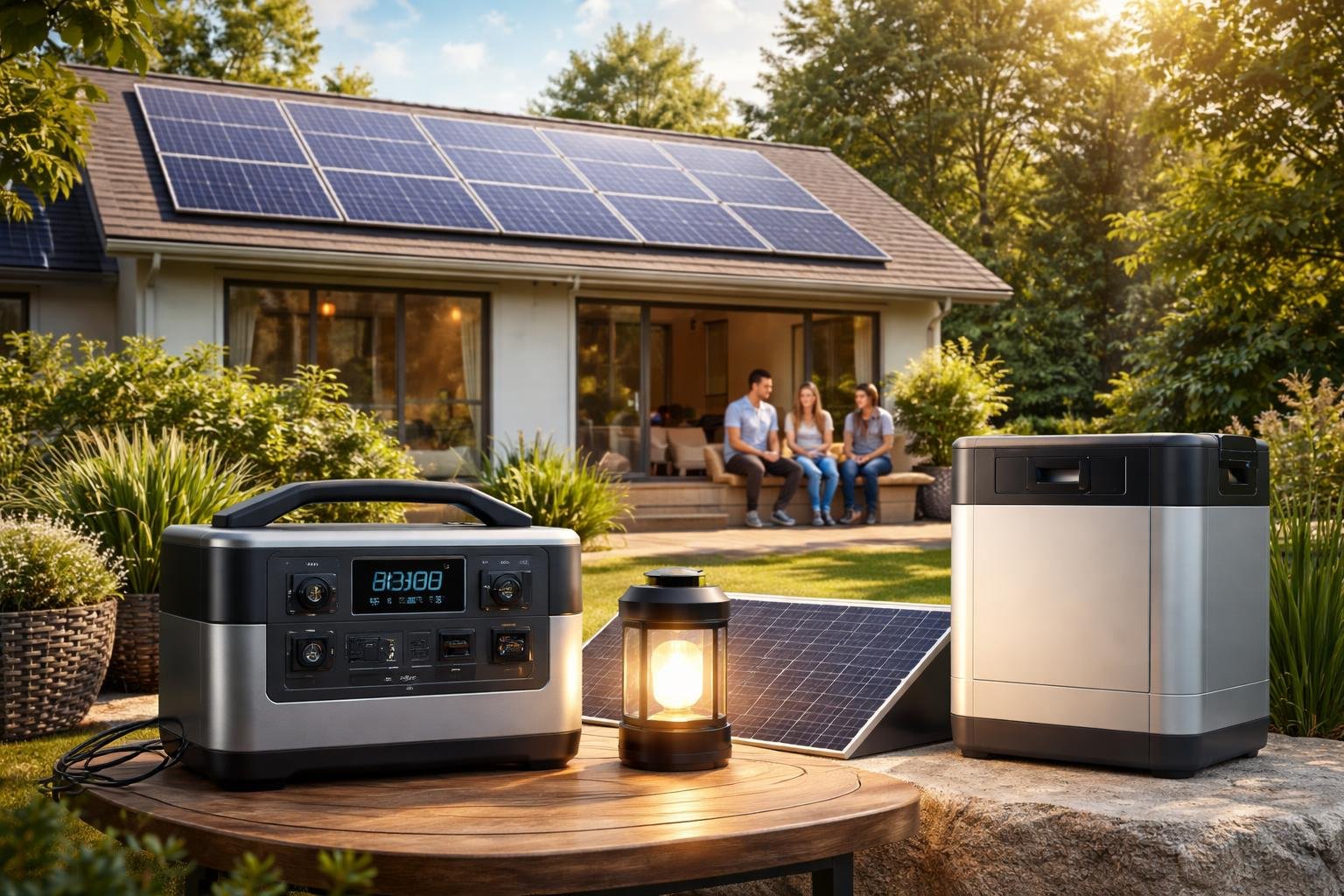
Choosing the best solar-powered equipment requires understanding which devices will meet a household’s specific needs during an outage. The market offers everything from compact portable units suitable for charging phones and running small appliances to whole-home systems capable of powering multiple circuits simultaneously. Battery capacity, wattage output, charging speed, and the number of devices that can run at once all factor into making the right choice.
This guide examines the essential solar-powered equipment for home disaster preparedness, covering the critical features that separate reliable systems from inadequate ones. It explores how different solar generators perform in actual emergency scenarios, reviews top models from established manufacturers, and provides practical information on integrating these systems into existing home setups whilst ensuring they remain functional through proper maintenance.
Essential Solar Powered Equipment for Home Disaster Preparedness
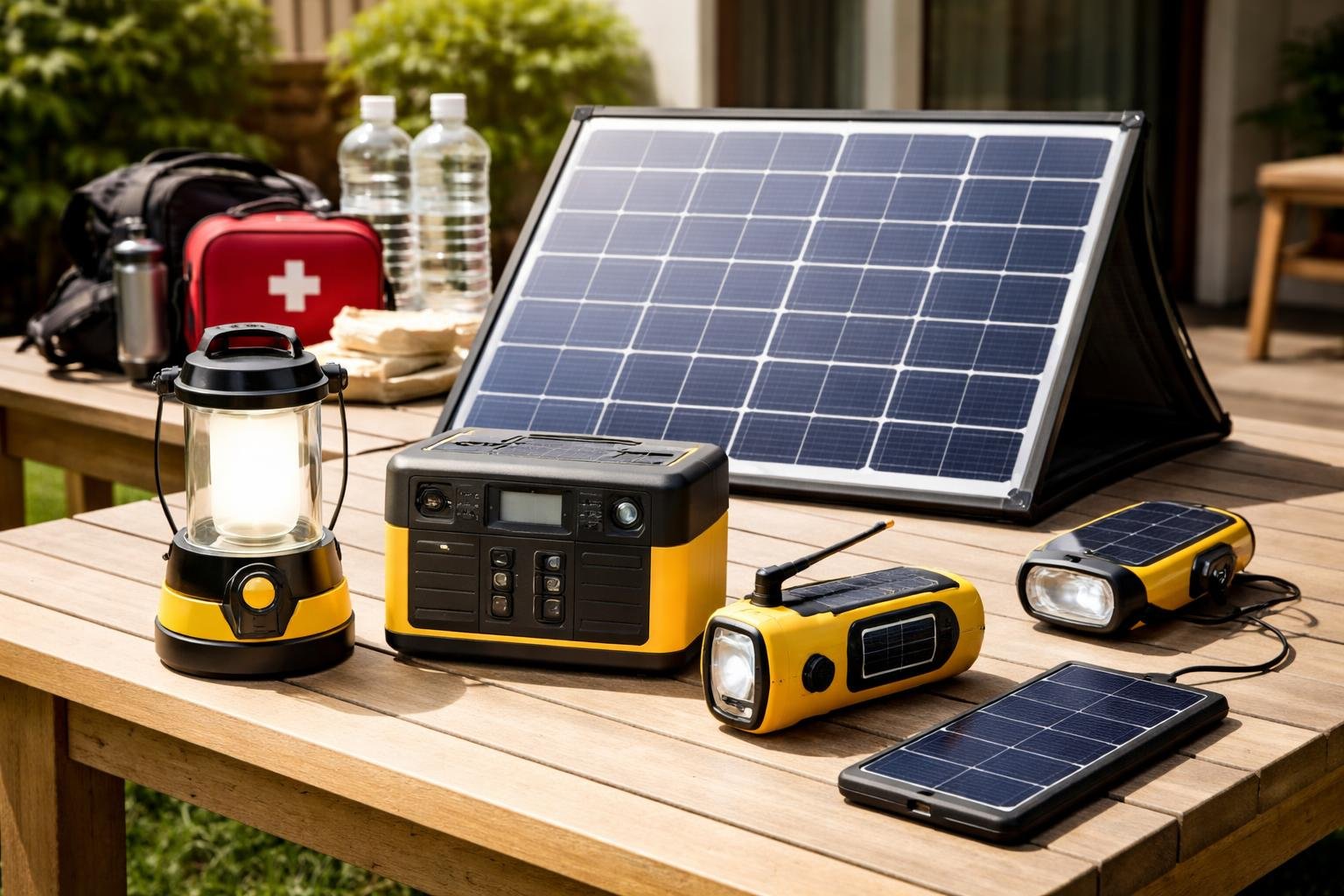
When the grid goes down during storms, floods, or other emergencies, solar-powered generators and portable power stations keep essential devices running without fuel. Quality portable solar panels paired with battery storage systems provide reliable backup power for lights, communication devices, and medical equipment.
Top-Rated Solar Generators for Emergency Power
Solar generators combine battery storage with built-in inverters to convert sunlight into usable electricity. Unlike petrol generators, they produce no fumes and require no fuel storage, making them safer for indoor use during power cuts.
The best solar generators offer multiple output options including AC outlets, USB ports, and 12V connections. Models with 1,000-2,000 watt-hour capacity handle most household essentials like refrigerators, lights, and mobile phones for several days. Look for units with expandable battery options that allow additional capacity as needs grow.
Key features include:
- Pure sine wave inverters for sensitive electronics
- Pass-through charging to use and charge simultaneously
- LCD displays showing battery levels and power usage
- Waterproof rating of IP65 or higher for outdoor durability
Popular models from manufacturers like Jackery, EcoFlow, or Goal Zero provide 500-3,000 watts of continuous power. Higher-capacity units support critical medical equipment, chest freezers, and well pumps during extended blackouts.
Recommended Portable Power Stations
Portable power stations work with separate solar panels to create flexible emergency power systems. These battery packs store energy collected from portable solar panels during daylight hours for use after dark.
Quality portable power stations feature lithium battery technology with 500-2,000 charge cycles before capacity degrades. Units with 500Wh capacity charge laptops 8-10 times or run CPAP machines for multiple nights. Larger 1,500Wh models power mini-fridges for 15-20 hours per charge.
Essential specifications include:
- Minimum 500Wh capacity for basic needs
- Multiple charging inputs (solar, mains, car charger)
- Fast recharge times under 5 hours via solar
- Built-in battery management systems preventing overcharge
Compact designs weighing under 7kg offer portability for evacuation scenarios. Some models include wireless charging pads and LED torches as built-in features.
Best Portable Solar Panels and Kits
Portable solar panels convert sunlight into electricity to charge power stations and generators. Foldable designs pack down to briefcase size whilst providing 100-200 watts of charging power in full sun.
The best portable solar panels use monocrystalline cells achieving 22-24% efficiency ratings. Panels with built-in kickstands angle toward the sun for optimal energy capture. Weather-resistant construction with IP67 ratings withstands rain and dust during outdoor deployment.
Complete solar generator kits bundle panels with power stations at reduced prices compared to separate purchases. Entry-level kits with 100W panels and 500Wh batteries suit basic lighting and device charging. Mid-range 200W systems support small appliances and longer run times.
Panel configurations:
| Wattage | Best For | Typical Recharge Time |
|---|---|---|
| 60-100W | Phones, tablets, radios | 5-8 hours |
| 100-200W | Laptops, lights, fans | 3-5 hours |
| 200W+ | Refrigerators, power tools | 2-4 hours |
Multiple panels can connect in parallel to increase charging speed during emergencies when every hour of sunlight counts.
Critical Features to Consider When Choosing Solar Powered Equipment
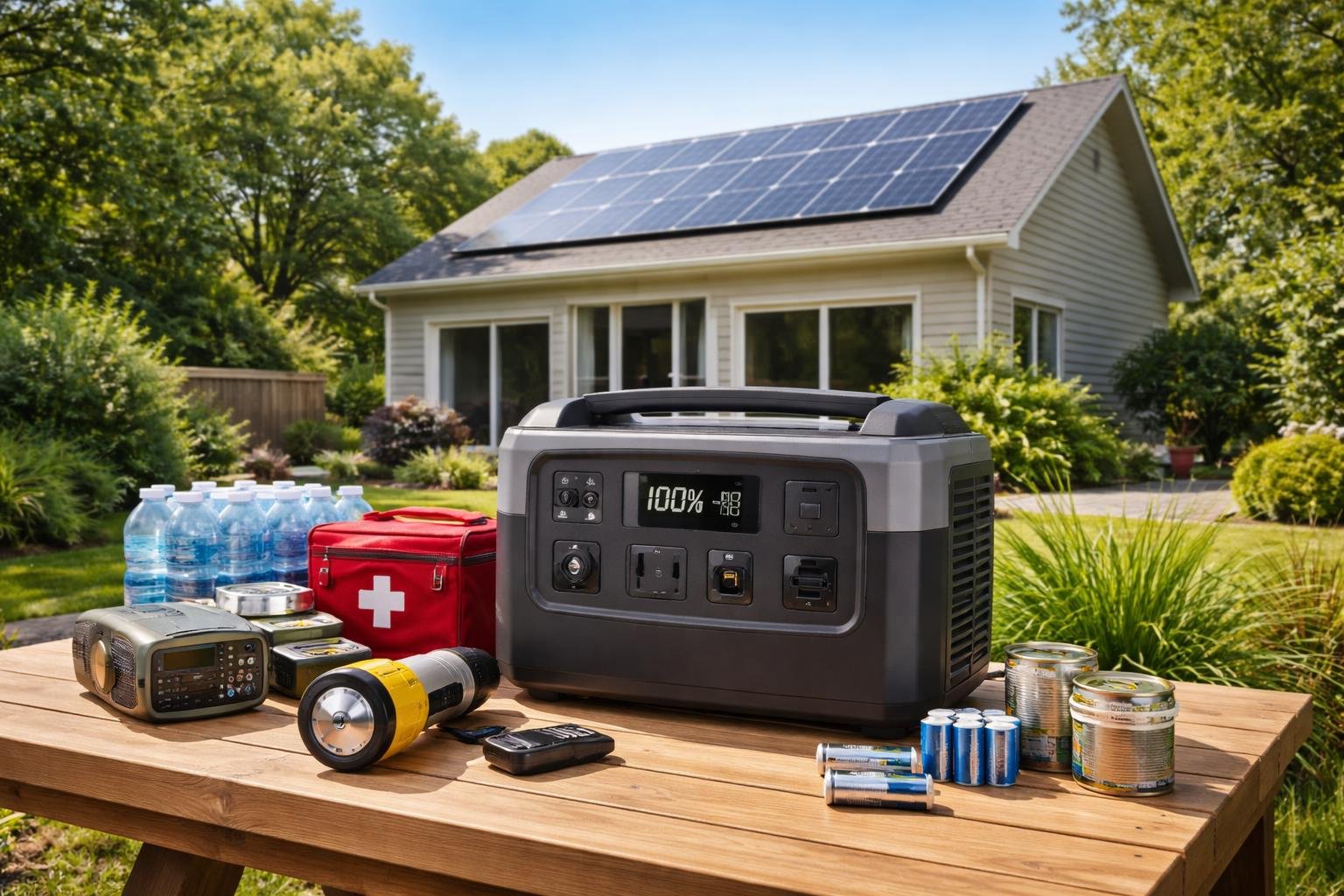
Selecting reliable solar powered equipment for disaster preparedness requires evaluating four key specifications: the battery’s storage capacity and chemical composition, the device’s power delivery capabilities, available charging connections, and physical construction quality.
Battery Capacity and Chemistry Explained
Battery capacity determines how long equipment can power devices during an outage. This specification appears as watt hours (Wh) or kilowatt hours (kWh). A unit with 1,000 Wh can run a 100-watt device for 10 hours.
Modern solar generators use different battery chemistries. LiFePO4 batteries (also called LFP batteries) offer the best performance for emergency equipment. These batteries last for 3,000 to 5,000 charge cycles compared to 500 to 1,000 cycles for standard lithium batteries.
LFP batteries remain stable in extreme temperatures. They resist thermal runaway, making them safer during disasters. The chemistry also maintains consistent power output as the battery drains.
Most disaster-ready units range from 500 Wh to 3 kWh capacity. Smaller capacities suit medical devices and communication equipment. Larger capacities handle refrigerators and cooking appliances. Calculate your critical devices’ total wattage and multiply by expected run time to determine needed capacity.
Power Output and Supported Appliances
Continuous output rating shows the maximum power a generator can deliver steadily. This figure differs from peak output, which only lasts seconds. A unit with 1,500-watt continuous output can run appliances totalling 1,500 watts simultaneously.
Pure sine wave inverters produce clean electricity that matches grid power. Medical equipment, sensitive electronics, and modern appliances require this power quality. Modified sine wave inverters damage these devices over time.
Check how many AC outlets the unit provides. Emergency equipment typically needs 2-4 outlets to power multiple appliances. Higher-capacity units may offer 6 or more outlets.
Run time depends on both battery capacity and appliance wattage. A 2,000 Wh generator running a 200-watt refrigerator provides 10 hours of operation. Running a 1,000-watt heater reduces run time to 2 hours.
Types of Charging Ports and Connectivity
Modern solar equipment must accommodate various devices. Standard AC outlets power household appliances and tools. USB-A ports charge phones and tablets at 12 watts. USB-C ports deliver up to 100 watts for laptops and rapid charging.
Quality units include multiple charging ports:
- 2-4 AC outlets for appliances
- 2-3 USB-A ports for basic devices
- 1-2 USB-C ports with power delivery
- 12V car charging ports for specialised equipment
USB-C ports with power delivery technology charge laptops and power tools without requiring bulky adapters. This feature eliminates the need to use AC outlets for small devices.
The equipment should support three input methods: solar panels, mains electricity, and car charging. This flexibility ensures recharging options during different disaster scenarios.
Portability and Durability
Weight affects whether equipment can be moved during evacuation. Units under 25 kg allow one person to carry them. Larger capacity systems may weigh 40-50 kg and need two people or wheels.
A telescoping handle and rugged wheels improve mobility. These features help transport heavy units across rough terrain or up stairs during emergencies.
The casing should use impact-resistant materials. Aluminium frames withstand drops better than plastic housings. Reinforced corners protect internal components.
Weather resistance matters for outdoor use and storage. An IP65 rating protects against dust and water splashes. This protection proves essential during floods or storms.
Ports need protective covers to prevent debris entry. Sealed designs keep moisture away from electrical connections. Check that the unit functions in temperatures from -10°C to 40°C.
Solar Generator Performance in Disaster Scenarios
During a power outage, a solar generator’s ability to recharge quickly and switch on automatically determines whether your family stays comfortable or struggles in the dark. Charging speed, backup activation, and flexible power inputs make the difference between reliable emergency power and a device that can’t keep up.
Solar Charging Time and Panel Efficiency
Solar charging time varies dramatically between models, ranging from three hours to over 70 hours for a full charge. The EcoFlow Delta Pro recharges in six hours with four solar panels, whilst the Goal Zero Yeti 6000x requires 35 to 70 hours even with four panels attached.
Panel efficiency depends on several factors:
- Weather conditions and cloud cover
- Panel positioning and angle adjustment throughout the day
- Geographic location and seasonal sunlight hours
- Solar conversion efficiency of the panels themselves
An MPPT charge controller maximises solar input by optimising the voltage from your panels. This technology extracts more power from available sunlight compared to basic charge controllers. Solar panel compatibility matters too—most generators work with multiple panel brands, but using the manufacturer’s recommended panels typically delivers the best performance.
The Bluetti AC500 demonstrates excellent efficiency by charging over 5 kWh in approximately five hours. For disaster scenarios, fast solar charging means your generator can replenish its backup battery during daylight hours whilst still powering essential appliances.
Fast and Hybrid Recharging Methods
Hybrid charging combines multiple power sources to reduce recharge time when solar input alone isn’t enough. Most solar generators for home backup accept AC output from wall sockets, car chargers, and solar panels simultaneously.
The Anker SOLIX C1000 features UltraFast charging that delivers a full charge in just one hour when plugged into a wall outlet. The EcoFlow Delta Pro can even connect to electric vehicle charging stations for rapid replenishment during emergencies.
Common hybrid charging options include:
- AC charging: Standard wall socket power (fastest method)
- Solar input: Renewable but weather-dependent
- Car charging: Useful during evacuations or whilst mobile
- Generator charging: Compatible with petrol generators when available
During extended power cuts, you can charge during peak sunlight hours via solar panels, then switch to a car charger if needed. This flexibility keeps your home backup power operational even when conditions aren’t ideal for solar conversion efficiency.
Automatic Backup and UPS Functions
Automatic backup power activates instantly when the grid fails, preventing interruption to critical devices. The EcoFlow Delta Pro and Bluetti AC500 both integrate directly with your home’s electrical panel through specialised transfer switches.
These systems function as uninterruptible power supplies (UPS), detecting outages in milliseconds and switching to battery power before your lights flicker. The EcoFlow Smart Home Panel can supply continuous power through up to 10 circuits, keeping refrigerators, medical equipment, and heating systems running.
Without home integration, you’ll need to manually plug devices into the generator’s outlets. This works fine for emergency power needs but doesn’t protect sensitive electronics from power loss. Models with X-Boost technology can handle higher wattage appliances by intelligently managing power distribution across outlets.
Manual systems still provide reliable backup, they just require you to connect devices after an outage begins. For disaster preparedness, automatic transfer capability offers superior protection and convenience.
Best Solar Generator Models and Brands for Home Emergency Use
Several brands lead the market with reliable solar generators designed for emergency power. EcoFlow, Bluetti, Jackery, Goal Zero, and Anker offer models ranging from compact units to whole-home backup systems.
Top Choices for Whole-Home Backup
The EcoFlow Delta Pro stands out as the leading choice for powering an entire home during emergencies. It provides 3.6 kWh capacity and connects directly to a home’s electrical panel through EcoFlow’s Smart Home Panel. The system supports up to 10 circuits and recharges in roughly six hours with four solar panels.
The Delta Pro Ultra expands this capability further with enhanced capacity options. Users can chain up to six Delta Pro units or batteries together to create 25 kWh of total power. This makes it suitable for extended outages.
The Bluetti EP500Pro offers another excellent whole-home solution with 5 kWh capacity. It charges in about five hours and weighs 182 pounds, making it strictly a stationary option. The system integrates with home electrical panels but requires professional installation by a licensed electrician.
Goal Zero Yeti 6000x provides the highest single-unit capacity at 6 kWh. However, it takes 35 to 70 hours to fully charge with four solar panels, which limits its effectiveness during prolonged emergencies.
Portable and Compact Units for Small Appliances
The Anker Solix C1000 serves those who need basic power for essential devices. Its 1 kWh capacity powers a fan for nearly 24 hours or a CPAP machine for over 18 hours. The unit weighs 30 pounds and includes 11 AC outlets plus a built-in light.
The EcoFlow Delta 2 Max offers a mid-range portable option that balances power and portability. It works well for charging phones, running small appliances, and powering lights during short outages.
Jackery Explorer 1000 represents an entry-level choice for those prioritising portability over capacity. It handles small electronics and basic appliances without the weight burden of larger models.
These compact units typically recharge faster than their high-capacity counterparts. They suit households that only need to power refrigerators, medical devices, and communication equipment during emergencies.
Expandable and High-Capacity Systems
The Jackery Solar Generator 3000 Pro offers 3 kWh capacity and charges in under three hours with six solar panels. It runs a refrigerator for up to three days on a single charge. The unit weighs nearly 100 pounds and includes wheels for easier movement, though it lacks home integration capabilities.
The Bluetti AC200P provides expansion flexibility through additional battery packs. Users add multiple B300K batteries to reach 16.5 kWh total capacity. The system includes Wi-Fi connectivity and an app for monitoring power consumption.
Anker Solix F3800 brings high capacity with expandable options suitable for growing power needs. It balances between whole-home systems and portable units.
The Jackery Solar Generator 2000 V2 serves as a middle-ground option with decent capacity and moderate expandability. It suits homes that need more than basic power but don’t require whole-home integration.
These expandable systems allow users to start with a base unit and add capacity as budgets allow or needs increase.
Integrating Solar Powered Equipment with Home Systems
Connecting solar equipment to a home’s electrical system requires specific hardware like transfer switches and smart panels. These devices allow solar generators and batteries to power essential circuits safely during emergencies whilst preventing dangerous backfeeding into the grid.
Home Backup Panels and Transfer Switches
A transfer switch acts as the gateway between solar equipment and a home’s electrical system. It prevents solar power from flowing back into the utility grid during outages, which protects line workers and equipment.
Manual transfer switches require someone to physically flip the switch when power goes out. These cost between £300 and £800 and work well for basic setups. Automatic transfer switches detect outages and switch to solar backup within seconds without any action needed. They typically cost £800 to £2,000 installed.
The switch connects to selected circuits rather than the entire house. Most homeowners prioritise:
- Refrigerators and freezers
- Medical equipment
- Heating or cooling systems
- Lighting in key rooms
- Mobile phone chargers
A smart home panel offers more control than traditional transfer switches. These panels let users adjust which circuits receive power through a mobile app. When solar battery levels drop, less critical items automatically shut off to extend runtime for essentials.
Using Solar Generators for Whole-House Power
Solar generators can provide whole-house backup if properly sized for the home’s needs. The system must include enough solar panels to recharge batteries during daytime and sufficient battery capacity for overnight use.
Most homes need between 10 kWh and 20 kWh of battery storage for basic whole-house coverage. Larger homes or those with higher energy use may require 30 kWh or more. The solar panels should produce at least 5 kW to 10 kW to keep batteries charged whilst simultaneously powering the home.
The inverter converts stored solar energy into standard household electricity. It must handle the combined wattage of all devices running at once. A 7 kW to 10 kW inverter suits most residential needs.
Whole-home backup differs from partial backup:
| Backup Type | Coverage | Typical Cost | Best For |
|---|---|---|---|
| Partial | Selected circuits only | £8,000-£15,000 | Essential needs during short outages |
| Whole-home | Entire house | £20,000-£40,000 | Extended outages or complete independence |
During extended disasters, whole-home systems require careful energy management. Running high-demand appliances like electric ovens or tumble dryers can quickly drain batteries if solar production is limited by weather.
EV Charging and Smart Home Features
Modern solar backup systems can charge electric vehicles during emergencies, though this significantly impacts available power. A typical EV needs 7 kW to 11 kW for standard charging, which equals the entire output of many home backup systems.
Smart energy management helps balance EV charging with household needs. Systems with Bluetooth connectivity allow users to monitor battery levels and adjust charging schedules through mobile devices. Some setups automatically pause EV charging when battery reserves drop below set thresholds.
Integration capabilities include:
- Scheduled EV charging during peak solar production hours
- Remote monitoring of energy usage across different circuits
- Automatic load shedding when battery capacity runs low
- Weather-based charging adjustments
Bluetooth connectivity enables real-time system monitoring without requiring internet access during outages. Users can check battery status, solar production, and energy consumption from their smartphones within range of the system.
Bidirectional EV chargers add another layer of capability. These allow the vehicle’s battery to send power back to the home during emergencies, essentially turning the car into a massive backup battery. However, this feature requires compatible vehicles and specialized equipment that costs £2,000 to £4,000 beyond standard charging hardware.
Maintenance, Lifespan, and Safety Tips for Solar Powered Backup
Solar battery systems typically last 10-15 years with proper care, though maintenance requirements and performance vary significantly based on battery chemistry and usage patterns. Understanding charge cycles, recharge capabilities, and operational characteristics helps homeowners maximise their investment whilst ensuring reliable backup power during emergencies.
Battery Lifespan and Shelf Life
Most solar batteries offer a 10-15 year lifespan under normal conditions. Lithium-ion batteries generally outlast lead-acid alternatives and require less frequent replacement.
Battery shelf life matters when storing backup systems for extended periods. Batteries lose capacity over time, even when unused. Store batteries in temperatures between 15°C and 25°C in dry locations to minimise degradation. Check stored batteries quarterly for leaks, capacity loss, or physical damage.
Temperature extremes accelerate ageing. High heat degrades battery chemistry faster, whilst freezing temperatures reduce charging capacity and may cause internal damage. Install batteries in climate-controlled enclosures with adequate ventilation to maintain optimal conditions.
Expandable battery systems allow users to add capacity as needs grow. This flexibility means homeowners can start with a smaller investment and scale up later without replacing the entire system. Most modern solar battery systems support modular expansion.
Maximising Charge Cycles and Fast Recharge
Charge cycles measure how many times a battery can discharge and recharge before capacity diminishes. Lithium-ion batteries typically handle 3,000-5,000 cycles, whilst lead-acid batteries manage 500-1,000 cycles.
Avoid deep discharges to extend cycle life. For lead-acid batteries, limit discharge to 50% of total capacity. Lithium batteries tolerate deeper discharges but still benefit from staying above 20% charge.
Fast recharge capability proves critical during disasters when sunshine may be intermittent. Modern lithium batteries recharge in 2-4 hours under optimal conditions, whilst lead-acid batteries require 6-8 hours or longer. Choose systems with higher charge rates if rapid recovery matters for your situation.
Use a Battery Management System (BMS) to prevent overcharging and over-discharging. These systems monitor voltage, temperature, and state of charge automatically, disconnecting power during unsafe conditions.
Quiet and Silent Operation
Silent operation distinguishes solar battery systems from petrol generators. Batteries produce no noise during discharge, making them suitable for indoor installation and nighttime use.
Quiet operation extends to the charging process as well. Solar panels and battery systems lack moving parts, eliminating mechanical noise entirely. Some inverters produce a slight hum during power conversion, but this remains barely audible in most settings.
This silence offers practical advantages during emergencies. Families can sleep undisturbed whilst backup power runs overnight. The lack of noise also avoids alerting others to your power capabilities during widespread outages, maintaining security and privacy.
Frequently Asked Questions
Choosing the right solar equipment for emergencies involves understanding power requirements, safety standards, and proper integration with home systems. These questions address the most common concerns about selecting, sizing, and maintaining solar backup equipment.
Which solar generators provide the best balance of output, battery capacity, and portability for home emergency use?
The Jackery Solar Generator 1000 v2 offers 1,500W output with 1,070Wh capacity whilst weighing just 10.8 kg, making it highly portable for its power class. The EF ECOFLOW RIVER 2 Max provides 1,000W output with 499Wh capacity at 6 kg, suitable for lighter emergency needs.
For households requiring more substantial backup, the OUKITEL P2001 Plus delivers 2,400W with 2,048Wh capacity. It handles larger appliances like fridges and medical equipment during extended outages.
Mid-range options include the ALLWEI 500W with 512Wh LiFePO4 battery at 5.9 kg. This unit provides reliable power for essential devices without excessive weight.
The balance between these factors depends on specific needs. A household prioritising refrigeration requires higher wattage, whilst those focused on communications and lighting can manage with lower capacity units.
How do I calculate the solar panel wattage and battery size needed to keep essential appliances running during a power cut?
Start by listing essential appliances and their wattage ratings, found on device labels or manuals. A typical fridge uses 150-400W, LED bulbs use 10-20W each, and a laptop requires 50-100W.
Calculate daily energy consumption in watt-hours by multiplying each device’s wattage by hours of daily use. Add these figures together for total daily consumption.
Battery capacity should cover at least 1.5 times daily consumption to account for cloudy weather and battery degradation. A household using 2,000Wh daily needs approximately 3,000Wh battery capacity.
Solar panel wattage must replenish daily usage within available sunlight hours. In the UK, average peak sun hours range from 2-4 hours daily depending on season. Divide daily consumption by peak sun hours and add 25% for system losses.
A home using 2,000Wh daily requires roughly 625W of solar panels (2,000 ÷ 4 hours × 1.25). Most setups use multiple panels to reach this total.
What safety features should I look for in a portable power station used indoors, such as ventilation, surge protection, and cut-offs?
Pure sine wave inverters prevent damage to sensitive electronics and medical devices. This feature ensures clean power output matching mains electricity quality.
Battery Management Systems (BMS) monitor voltage, current, and temperature to prevent overcharging, over-discharging, and overheating. These systems automatically shut down the unit when dangerous conditions arise.
Overload protection cuts power when connected devices exceed the station’s rated capacity. This prevents internal component damage and potential fire hazards.
Short-circuit protection immediately disconnects output when detecting wiring faults. Temperature monitoring triggers cooling fans or shutdown procedures when internal heat exceeds safe limits.
LiFePO4 batteries offer superior safety compared to standard lithium-ion variants. They resist thermal runaway and remain stable at higher temperatures.
Adequate ventilation slots allow heat dissipation during operation. Units designed for indoor use include passive cooling systems that operate silently without compromising safety.
Which household devices are most practical to run from solar-backed battery power during an extended outage, and for how long?
LED lighting represents the most efficient use of stored power, with a 10W bulb running for 100 hours on a 1,000Wh battery. Modern LED lamps provide adequate illumination whilst consuming minimal energy.
Mobile phones and tablets require 10-20Wh per charge, allowing 50-100 charges from a 1,000Wh capacity. These devices maintain communication during emergencies.
Laptops consume 50-100W and run for 10-20 hours on 1,000Wh. They provide internet access and work capabilities during extended outages.
Small fridges using 150W operate for approximately 6-7 hours per 1,000Wh, though intermittent compressor cycling extends this duration. A 500Wh daily consumption allows 2-day operation from a 1,000Wh battery.
CPAP machines typically use 30-60W, running for 16-33 hours on 1,000Wh. Medical devices take priority in power allocation planning.
Electric kettles, heaters, and washing machines prove impractical due to high wattage requirements (1,000-3,000W). These devices rapidly deplete battery reserves and require substantial solar arrays for sustained use.
What maintenance and storage routines help solar panels, inverters, and batteries remain reliable for emergency readiness?
Solar panels require cleaning every 3-6 months to remove dirt, leaves, and debris that reduce efficiency. Use water and a soft cloth rather than abrasive materials that scratch protective coatings.
Store panels in dry locations away from direct sunlight when not deployed. Protect connectors from moisture and corrosion by keeping them capped or stored indoors.
LiFePO4 batteries maintain optimal health when stored at 50-60% charge in cool, dry locations between 10-25°C. Full discharge or prolonged storage at full charge degrades capacity over time.
Check battery charge levels every 3 months and recharge if capacity drops below 50%. This prevents deep discharge damage that permanently reduces battery life.
Inspect cable connections for corrosion or looseness every 6 months. Tighten terminals and clean oxidation with appropriate contact cleaner.
Test the complete system quarterly by running typical loads for several hours. This verification ensures all components function correctly when emergencies arise.
Firmware updates for smart power stations improve performance and safety features. Check manufacturer websites regularly for available updates.
How do I integrate solar backup with my home electrics without unsafe wiring, and when should I use a qualified electrician?
Portable solar generators connect directly to appliances via standard plugs, requiring no permanent electrical work. This approach suits temporary emergency backup without installation complexity.
Transfer switches require professional installation by a qualified electrician registered with a competent person scheme. These devices safely isolate mains power whilst connecting backup systems to home circuits.
Never backfeed power through standard outlets into home wiring. This practice creates electrocution hazards for utility workers and damages connected equipment.
Permanent solar installations exceeding 3.68kW or involving mains circuit
