


Setting up solar or wind energy systems requires careful selection of electrical components that directly impact system performance, safety, and longevity. The most important electrical components include inverters to convert DC power to AC power, charge controllers to regulate battery charging, batteries for energy storage, circuit breakers and disconnects for safety, and appropriate wiring and cabling sized for the system’s voltage and current requirements. These components work together to capture renewable energy and deliver it safely to homes or businesses.
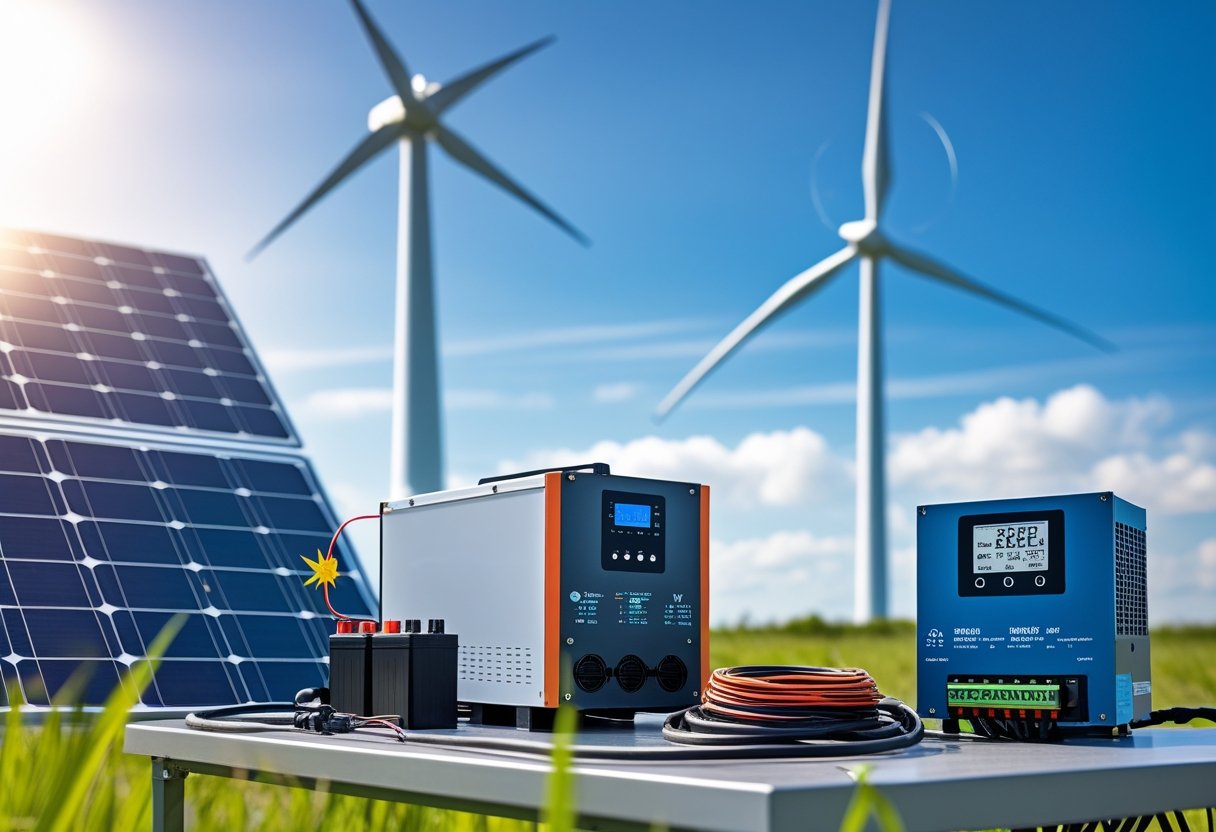
Choosing the right components involves understanding how mechanical and electrical parts work together in renewable energy systems. Each component must match the system’s specifications and handle the expected power loads. Poor component selection leads to reduced efficiency, safety hazards, and costly repairs.
The decision-making process extends beyond simply picking parts from a catalogue. Factors like climate conditions, energy demands, available space, and budget all influence which components work best for a particular installation. Understanding these selection criteria helps system owners avoid common mistakes and build reliable renewable energy systems.
Essential Electrical Components for Solar and Wind Energy Systems
Solar and wind energy systems require specific electrical components to capture, convert, and store power effectively. The basic electrical components work together to transform renewable energy into usable electricity for homes and businesses.
Solar Panels and Wind Turbines
Solar panels and wind turbines serve as the primary energy collection devices in renewable energy systems. Solar panels contain photovoltaic cells that convert sunlight directly into direct current electricity. The efficiency of these panels typically ranges from 15% to 22% for residential installations.
Wind turbines capture kinetic energy from moving air through rotating blades. The mechanical power conversion occurs in two stages: the blades spin a shaft connected to a generator, which produces electricity. Turbine size determines power output, with residential units generating 1 to 10 kilowatts and commercial models producing much more.
Key specifications to consider:
- Rated power output (measured in watts or kilowatts)
- Efficiency rating
- Expected lifespan (typically 25-30 years for solar panels, 20-25 years for wind turbines)
- Operating temperature range
- Warranty coverage
Inverters and Power Converters
Inverters transform the direct current produced by solar panels and wind turbines into alternating current that household appliances require. This conversion maintains compatibility with the electrical grid and standard power outlets.
Three main inverter types exist: string inverters, microinverters, and power optimisers. String inverters connect multiple panels in series and work well for installations without shading issues. Microinverters attach to individual panels, offering better performance when partial shading occurs. Power optimisers combine features of both types.
Power electronics devices handle voltage regulation and frequency matching to ensure stable power delivery. The inverter efficiency rating indicates how much DC power converts to usable AC power, with quality units achieving 96% to 98% efficiency.
Maximum power point tracking technology helps inverters extract optimal power from solar panels under varying conditions. This feature adjusts the electrical operating point to maximise energy harvest throughout the day.
Charge Controllers
Charge controllers regulate the flow of electricity from solar panels or wind turbines to batteries. These devices prevent overcharging, which damages battery cells and reduces their lifespan.
Two primary types dominate the market: pulse width modulation controllers and maximum power point tracking controllers. PWM controllers work as simple switches that reduce charging current as batteries fill. MPPT controllers use sophisticated electronics to extract maximum power whilst properly charging batteries, typically improving efficiency by 20% to 30% compared to PWM units.
The controller must match the system voltage (12V, 24V, or 48V) and handle the maximum current from the energy source. Undersized controllers overheat and fail, whilst oversized units add unnecessary cost.
Temperature compensation adjusts charging parameters based on ambient conditions, protecting batteries in extreme weather. Load control features allow the controller to power devices directly whilst managing battery charging.
Batteries and Energy Storage
Batteries store excess electricity generated during peak production periods for use when solar panels or wind turbines cannot produce power. A hybrid energy storage system becomes necessary for reliable operation in off-grid installations.
Lead-acid batteries remain popular due to lower upfront costs, whilst lithium-ion batteries offer superior performance. Lithium batteries provide higher energy density, longer cycle life (5,000+ cycles versus 500-1,000 for lead-acid), and deeper discharge capability.
Battery capacity considerations:
- Daily energy consumption (measured in kilowatt-hours)
- Days of autonomy required (typically 2-5 days for off-grid systems)
- Depth of discharge limits (50% for lead-acid, 80-90% for lithium)
- Round-trip efficiency (70-85% for lead-acid, 90-95% for lithium)
Battery banks require proper sizing to meet energy needs without excessive cycling. Undersized storage leads to frequent deep discharges that shorten battery life, whilst oversized banks increase costs without proportional benefits.
Temperature affects battery performance significantly, with most types operating optimally between 15°C and 25°C. Proper ventilation prevents heat buildup in battery enclosures, particularly important for lead-acid batteries that release hydrogen gas during charging.
Critical Criteria for Selecting System Components
Choosing the right electrical components requires careful evaluation of performance specifications, integration requirements, proper sizing calculations, and adherence to recognised safety standards. These factors directly impact system reliability, energy output, and long-term operational costs.
Component Efficiency and Ratings
Efficiency ratings determine how much input energy converts to usable output. Inverters for solar systems typically range from 95% to 98% efficiency, with higher-rated models reducing energy losses during DC to AC conversion. Wind turbine generators offer varying efficiency levels based on their design, with permanent magnet generators often achieving better performance than induction alternatives.
Power ratings must match the system’s expected output. Solar charge controllers need amperage ratings that exceed the panel array’s maximum current by at least 25%. Wind turbine controllers require similar headroom to handle peak generation periods safely.
Temperature coefficients affect component performance in extreme conditions. Inverters may derate their output capacity at high temperatures, whilst solar panels lose efficiency as heat increases. Selection guidelines for wind energy technologies emphasise matching component specifications to local environmental conditions.
Compatibility and System Integration
All electrical components must operate at matching voltage levels. A 48-volt battery bank requires a 48-volt inverter and charge controller to function properly. Mixing voltage ratings causes system failures or equipment damage.
Communication protocols between devices enable monitoring and optimisation. Many modern inverters and controllers use Modbus, CAN bus, or proprietary systems to share data. Components from different manufacturers may not communicate effectively without additional interfaces.
Grid integration of solar and wind systems presents specific compatibility challenges. Grid-tied inverters must synchronise with mains frequency and voltage whilst meeting utility connection requirements. Off-grid systems need compatible battery management systems that work with chosen charging equipment.
Sizing and Capacity
Component capacity must accommodate maximum system loads plus a safety margin. Inverters sized too small cannot handle peak demands, whilst oversized units cost more and may operate inefficiently at low loads. A typical residential system requires 20-30% capacity above expected peak usage.
Cable sizing depends on current flow and distance. Undersized cables create voltage drops that reduce system performance and generate dangerous heat. Solar arrays positioned far from inverters need larger gauge cables than those installed nearby.
Battery bank capacity relates to energy storage needs and discharge rates. Systems requiring multiple days of backup need larger banks. Hybrid energy system sizing strategies balance initial costs against reliability requirements and available renewable resources.
Safety and Certification Standards
Certified components meet established safety benchmarks for electrical equipment. CE marking in Europe indicates compliance with applicable directives, whilst IEC standards cover international requirements. UL listings provide additional validation for components sold in certain markets.
Circuit protection devices prevent fires and equipment damage. Fuses, circuit breakers, and surge protectors must carry appropriate ratings for their location in the system. DC circuits require specialised protection devices that differ from standard AC equipment.
Installation standards govern proper mounting, ventilation, and clearance requirements. Inverters need adequate airflow to prevent overheating. Batteries require ventilation to disperse hydrogen gas safely. Design aspects of wind energy systems include specific safety considerations for rotating machinery and high-voltage generation equipment.
Installation, Connection, and Maintenance Considerations
Proper installation requires attention to wire sizing, protection devices, and monitoring systems that keep renewable energy systems running safely. These components connect the power generation equipment to batteries, inverters, and the electrical grid whilst protecting against common failures.
Wiring and Cabling Requirements
Cable sizing directly affects system efficiency and safety. Undersized wires create resistance that wastes energy as heat and can cause fires. Solar installations typically use cables rated for outdoor UV exposure and temperatures up to 90°C.
DC cables between solar panels and inverters must handle higher voltages than AC wiring. A 5kW solar system operating at 48V requires cables that can safely carry 100+ amps. Wind turbines need cables that withstand vibration and weather exposure inside the tower.
The wire gauge depends on three factors: current load, cable length, and acceptable voltage drop. Most systems limit voltage drop to 3% or less. Longer cable runs need thicker wires to maintain efficiency.
Key cable specifications include:
- Copper conductors for better conductivity than aluminium
- Double insulation for outdoor and underground runs
- Proper colour coding (red for positive DC, black for negative)
- Strain relief at connection points to prevent wire damage
Stand-alone photovoltaic systems require users to understand how to maintain all system components properly.
Mounting, Enclosures, and Protection Devices
Solar panels need secure mounting systems that withstand wind loads up to 150 mph in most regions. Roof mounts attach to rafters, not just roof surfaces. Ground mounts use concrete footings or driven piles.
Electrical enclosures protect inverters, charge controllers, and disconnect switches from moisture and dust. NEMA 3R-rated boxes work for most outdoor installations. Indoor equipment rooms need proper ventilation to prevent overheating.
Protection devices prevent damage from electrical faults. Circuit breakers stop overcurrent conditions. Surge protectors guard against lightning strikes and grid voltage spikes. Solar power systems need protection devices to avoid electrical issues during operation.
Essential protection components:
| Device | Function | Typical Rating |
|---|---|---|
| DC Disconnect | Isolates panels from inverter | 250-600V DC |
| AC Disconnect | Separates system from grid | 240V AC |
| Surge Protector | Limits voltage spikes | Type 1 or Type 2 |
| Ground Fault Protection | Detects current leakage | 30mA sensitivity |
Grounding systems connect all metal components to earth, preventing shock hazards.
Monitoring and Control Equipment
Monitoring systems track energy production, battery status, and equipment performance. Basic monitors display voltage, current, and power output. Advanced systems send data to smartphones or computers through Wi-Fi connections.
Production meters measure kilowatt-hours generated daily and annually. This data helps identify performance issues before they become serious. A sudden drop in output might indicate dirty panels or failing components.
Battery monitors show state of charge, voltage, and charging cycles for off-grid systems. They prevent over-discharge that shortens battery life. Some models estimate remaining runtime based on current usage.
Remote monitoring alerts system owners to problems immediately. A notification about inverter failure allows quick repairs before losing power. Temperature sensors warn of overheating equipment.
Control systems manage when batteries charge and discharge. They can switch loads on during peak solar production and off when batteries run low. Programmable controllers optimize energy use automatically without manual adjustments.
